




How-To
4MP vs 8MP CCTV: Which Resolution Do You Actually Need?
 How-To
Eight megapixels sounds twice as good as four. It isn’t. On a fair number of the sites we supply it is the worse buy, and we’ll say so over the counter before we take the order.
4MP is 2560 by 1440. 8MP, which everyone badges as 4K, is 3840 by 2160. Call it 2.25 times the pixels. What you get for them is the ability to cover a wider scene and still resolve something useful in one corner of it, or to zoom into recorded footage a fortnight later and read a plate off a van that was never the point of that camera.
Pixels per metre
A 4MP camera watching a doorway six metres away will give you a far more identifiable face than an 8MP camera watching a whole car park. Same money, roughly.
Manufacturers publish DORI figures for exactly this. Detect, Observe, Recognise, Identify. The Identify number is the one worth reading, because that is the distance at which your footage stops being a record that something happened and starts being evidence that somebody can actually act on. It is always shorter than people expect. Always. On a typical 4mm lens you’re talking a few metres, not the length of a driveway.
Why 4K often looks worse after dark
Two cameras. Same sensor size, one 4MP and one 8MP. The 8MP carves that same sensor into more pixels. Each one is smaller, and a smaller pixel collects less light. So a decent 4MP will often hand you a cleaner night image than an 8MP of the same generation at the same price.
All of that flips the moment the 8MP has a physically bigger sensor or a wider aperture, which is precisely what the 24/7 colour ranges are doing. A ColorVu or Full-colour 8MP at F1.0 will beat a budget 4MP comfortably once the light goes. Compare like with like. Better still, ignore the megapixel badge and read the lux figures.
What 4K costs you after the install
| 4MP | 8MP / 4K | |
|---|---|---|
| Bitrate per camera | 4 to 6 Mbps | 8 to 12 Mbps |
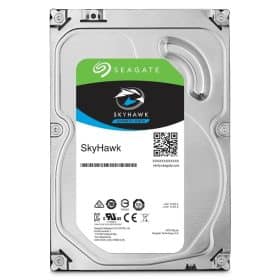
| Storage, 8 cameras, 30 days | around 13 TB | around 27 TB |
| Recorder bandwidth | most units cope | check the datasheet |
| Remote viewing on mobile data | fine | can struggle |
On a four-camera domestic job the difference is a bigger drive and very little else. Stretch the same choice across twenty cameras and it changes which recorder you need, and by the time you have paid for the extra drives and the higher throughput unit, the 4K decision has quietly cost you more than the cameras did.
How we’d spec it
- Tight scene with decent light, where the detail has to stand up later. 8MP earns its money.
- Wide scene you know you will be zooming into. 8MP again.
- Dark site where night performance is the priority. A good 4MP usually wins.
- Fixed budget. A better lens and sensor at 4MP beats a cheap 4K camera every time.
- Viewing over patchy mobile signal. 4MP, or set the substream properly.
Mixing resolutions across one system is completely normal and we do it on most jobs. Put the 8MP where the evidence is going to come from, and run 4MP on the positions that are really only telling you something moved. Spend what you saved on a better camera at the two positions that will end up in a statement.
A cheap 4K camera on a wide, badly lit forecourt is a false economy and we’d rather not sell you one. Both resolutions sit in the camera range. We do not hold most lines in depth, so ask us to check the model before you travel. Delivered orders are usually dispatched within 24 to 48 hours. A few ranges are trade account only. Ring 0121 655 0146 and we’ll tell you which side of that line your shortlist sits on.
Frequently asked questions
Is 8MP always better than 4MP for CCTV?
No. It resolves more across a wide scene, but on the same sensor size its smaller pixels gather less light, so a comparable 4MP often performs better at night. Match the resolution to the scene and the lighting rather than buying the bigger number.
Is 4MP enough to identify a face?
At the right distance, yes. What matters is pixels per metre rather than total megapixels. Check the camera’s DORI identify figure, which is usually only a few metres.
How much more storage does 4K need?
Roughly double. Eight 4MP cameras recording continuously for thirty days need about 13 TB. The same eight cameras at 8MP need about 27 TB.
Can I mix 4MP and 8MP on one recorder?
Yes, and most systems do. Each stream is handled independently. Add up the total bitrate and check it against the recorder’s incoming bandwidth limit.