
How-To
Hikvision ColorVu vs Dahua Full-colour: Which Should You Fit?
 How-To
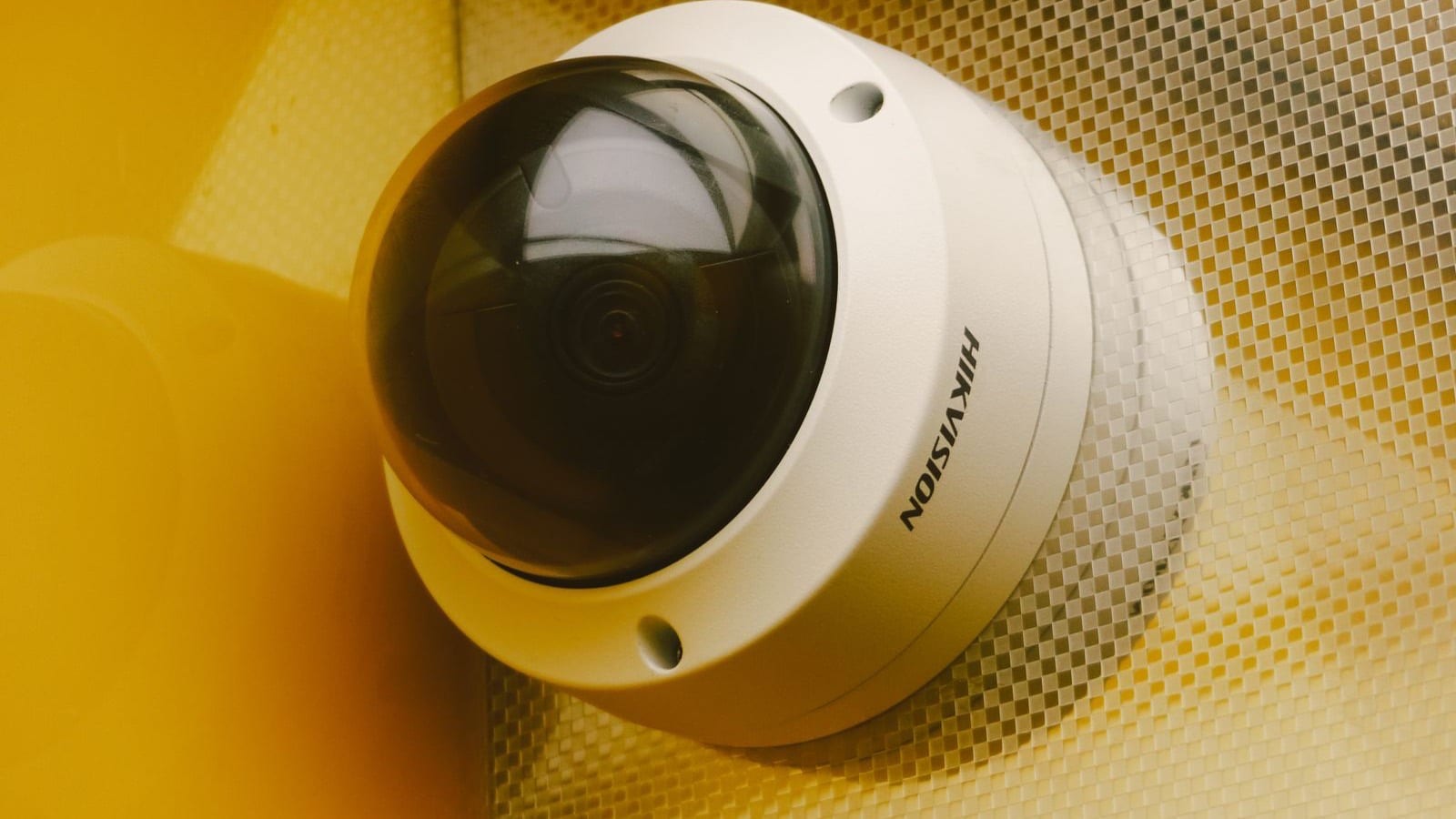
Colour after dark is the whole point of both these ranges. Strip that away and you are paying a premium for nothing. So if you are specifying for a site where somebody will one day need a description rather than a grey smudge, the choice is Hikvision ColorVu or Dahua Full-colour, and the two of them arrive at the same result by very nearly the same route. They still behave differently enough on a real British site, in real British weather, that the decision is worth five minutes of thought rather than a reflex grab at whichever badge you happened to buy last time.
We sell both and we fit both. So this is the version you get leaning on the trade counter, not the version printed on the back of the box.
What both are actually doing
A conventional camera gives up at dusk and flips to infrared. Clean monochrome picture. It also throws away the single most useful thing a camera can record. Colour. “Dark hatchback, red jacket” is worth considerably more to everybody than “mid-grey car, mid-grey jacket”.
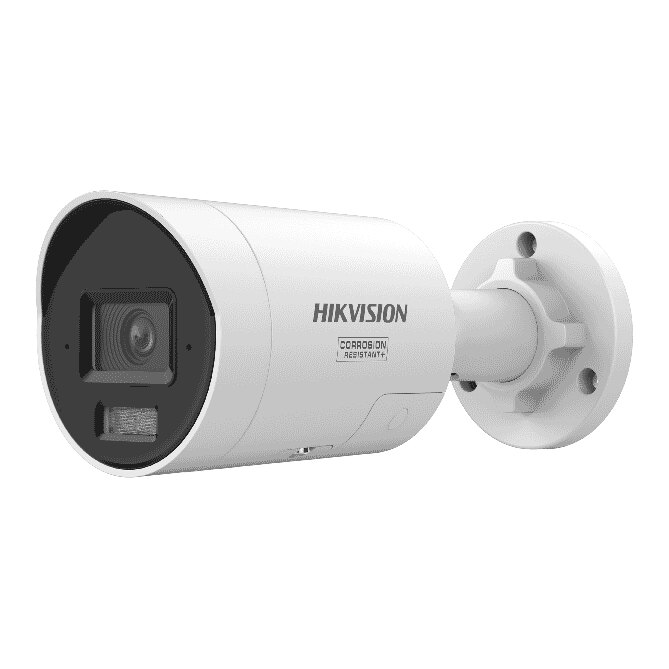
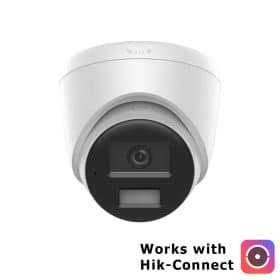
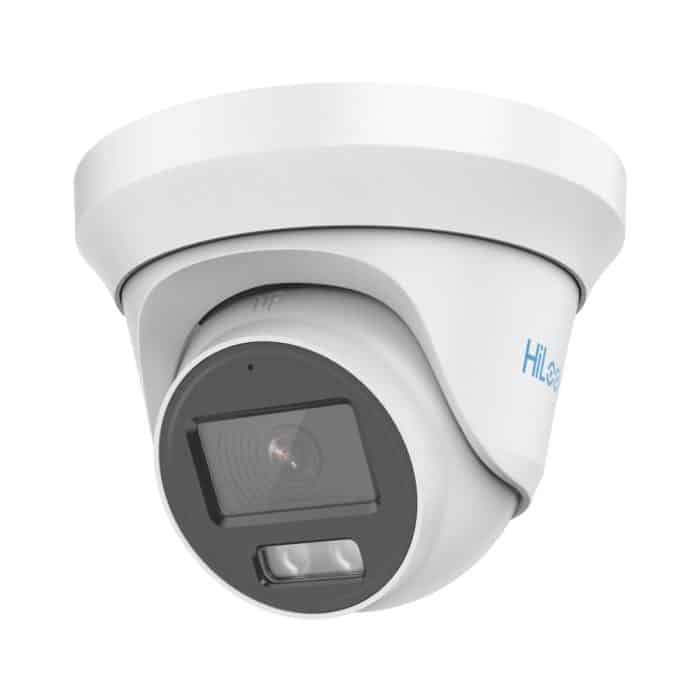
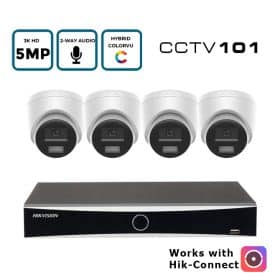
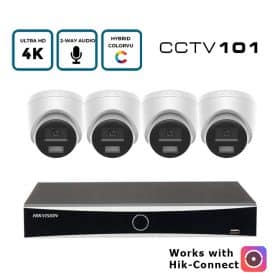
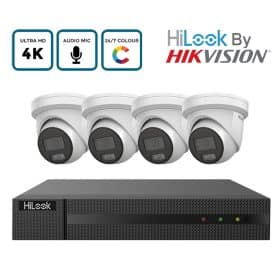
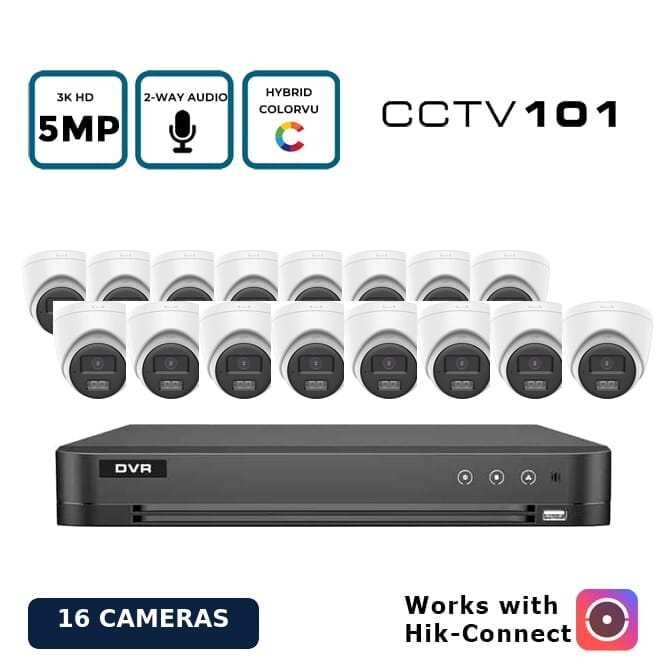
Both ranges solve it the same way. A much larger aperture, usually F1.0, with a more sensitive sensor sat behind it. When the ambient light finally runs out altogether, a warm white LED fills in. Colour around the clock.
Where they part company
| Hikvision ColorVu | Dahua Full-colour | |
|---|---|---|
| Maturity | Out earlier, wider model range | Later to it, caught up fast |
| Near-darkness | Reaches for the white LED sooner | Holds colour a bit longer on ambient |
| Motion filtering | AcuSense human and vehicle classification | SMD Plus, very good on foliage |
| UK availability | Everywhere | Good, slightly narrower |
| Price like-for-like | Small premium | Often a little cheaper |
That motion filtering row matters far more than the spec sheets let on. Put a camera on a boundary with hedging or a couple of trees in shot and the wind does the rest of the work for you. Then come the alerts. A customer who gets pinged all afternoon on a breezy Tuesday stops trusting the system. By March the thing may as well be a dummy on a bracket. Dahua’s SMD Plus has a good reputation for ignoring that sort of movement. Hikvision’s AcuSense is strong at working out that the thing moving is a person or a vehicle rather than simply noticing that some pixels changed.
The bit people get wrong
A pure ColorVu or Full-colour camera carries no infrared whatsoever. None. Switch the white LED off with no ambient light to fall back on and you are looking at a black rectangle.
On a lit forecourt or a street-lit frontage that is no problem at all. Down a pitch-black side return, with a customer who will object in week one to a white light burning outside a bedroom window all night, it is flatly the wrong camera. You will hear about it inside a fortnight.
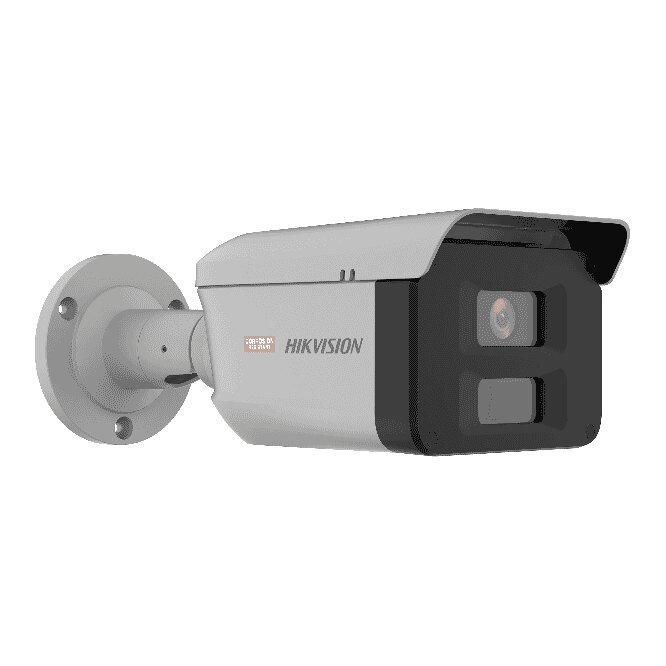
Use a hybrid in those positions. Hikvision call theirs Smart Hybrid Light and Dahua have equivalent dual-illumination models. They sit in infrared and keep quiet, and only when something is actually detected does the white light come up and hand you your colour.
What we’d put where
- Lit areas where the customer wants colour constantly. Full ColorVu or Full-colour, no hesitation.
- Dark corners, or any customer you suspect will be funny about lighting. Hybrid.
- Mixed site, hybrid throughout. One product family is easier to configure now and a great deal easier to support in two years when somebody else is on the phone asking why a camera has gone off.
- Heavy foliage in frame. Lean Dahua for the motion filtering.
What we won’t do is sell a pure ColorVu into an unlit alley because it came out cheaper on the quote. That is a false economy. You will be back on site on your own diesel, explaining why the camera they paid for shows a black screen at two in the morning.
Have a look through the camera range, or the kits if a matched set suits the job better. We don’t hold every line in depth, so if the model you want isn’t on the shelf, check the model is on the shelf before you travel. Online orders are usually dispatched within 24 to 48 hours. A few lines are trade account only. Ring 0121 655 0146 and we’ll tell you which.
Frequently asked questions
Is ColorVu better than Dahua Full-colour?
Neither wins outright. ColorVu has the longer track record and the wider model range. Dahua tends to hold colour slightly longer on low ambient light and it filters foliage movement better. On a lit site either one performs well.
Do ColorVu cameras work in complete darkness?
Only with the white LED on. A pure ColorVu has no infrared, so with the LED disabled and no ambient light it will not produce a usable image. If total darkness is a possibility, choose Smart Hybrid Light instead.
Can I mix Hikvision and Dahua cameras on one recorder?
Usually yes, over ONVIF. You do lose the manufacturer features such as AcuSense or SMD Plus classification, and the configuration gets fiddly. We would not build a new system that way.
Does 24/7 colour need more storage?
A little. Colour compresses slightly less efficiently than monochrome infrared footage, and white light at night gives the encoder more detail to carry. Allow ten to fifteen per cent over an equivalent infrared system.