





Buying Guides
CCTV Power Supplies: How Many Amps and Which Kind
 Buying Guides
Power is the dull part of CCTV, right up until a camera reboots every night at ten past nine. That timing is a clue. It’s when the infrared or the white light comes on, the camera’s current draw jumps, and an undersized or overstretched power supply can’t keep the voltage up. Nearly every “faulty camera at night” call has power at the bottom of it. Not the camera.
Work out the amps
Analogue HD cameras and most non-PoE IP cameras run on 12V DC. The figure to find is the camera’s maximum power in watts, on the datasheet, which is always the night-time figure with the lights on. Divide watts by 12 to get amps.
| Camera’s maximum draw | Amps at 12V | Four cameras | Eight cameras |
|---|---|---|---|
| 4 W | 0.33 A | 1.3 A | 2.7 A |
| 6 W | 0.5 A | 2 A | 4 A |
| 9 W | 0.75 A | 3 A | 6 A |
Then add headroom. Always. Run a supply at its full rating all night, every night, and it runs hot and fails early. Allow at least a quarter on top. So four 6W cameras want 2A, plus headroom, which makes a 3A supply the minimum and a 5A one the comfortable choice. Colour-at-night cameras with white light sit at the hungry end, so read the datasheet rather than guessing.
One adapter per camera
The simplest way to power a single camera is a plug-in 12V adapter of its own, usually 1A. Fine for one or two cameras near a socket. Past that, a row of adapters in an extension block is untidy, every one of them is a separate thing to fail in a hot loft in August, and when one does you’ll be pulling them out one by one with a torch trying to work out which camera it fed. Don’t.
One big adapter and splitter leads
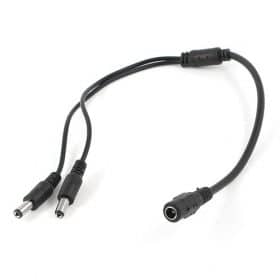
A 12V 5A supply with a 4-way lead powers four cameras from one socket. Our analogue kits come with one, and for a small house system it works well. Two cautions. Size the adapter for the total draw of everything on the splitter. And remember that a short on one camera’s cable can take the whole adapter down, and every camera with it.
Fused distribution boxes
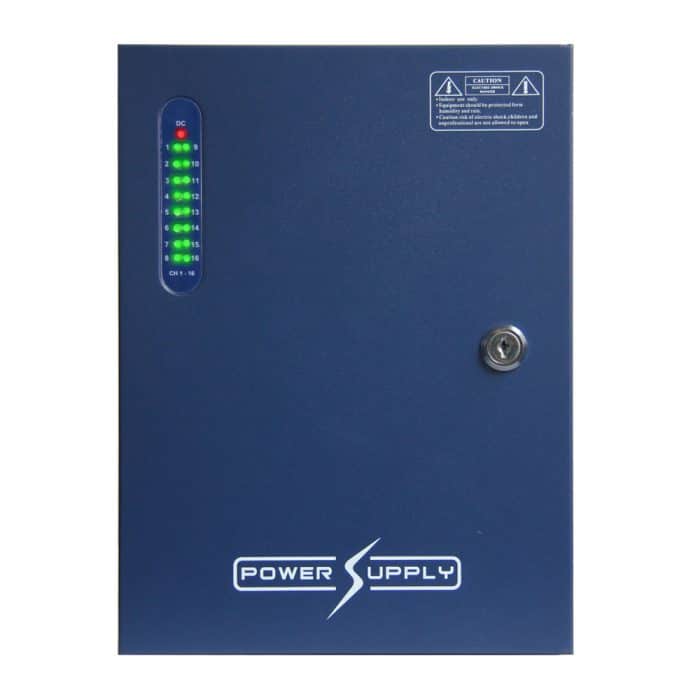
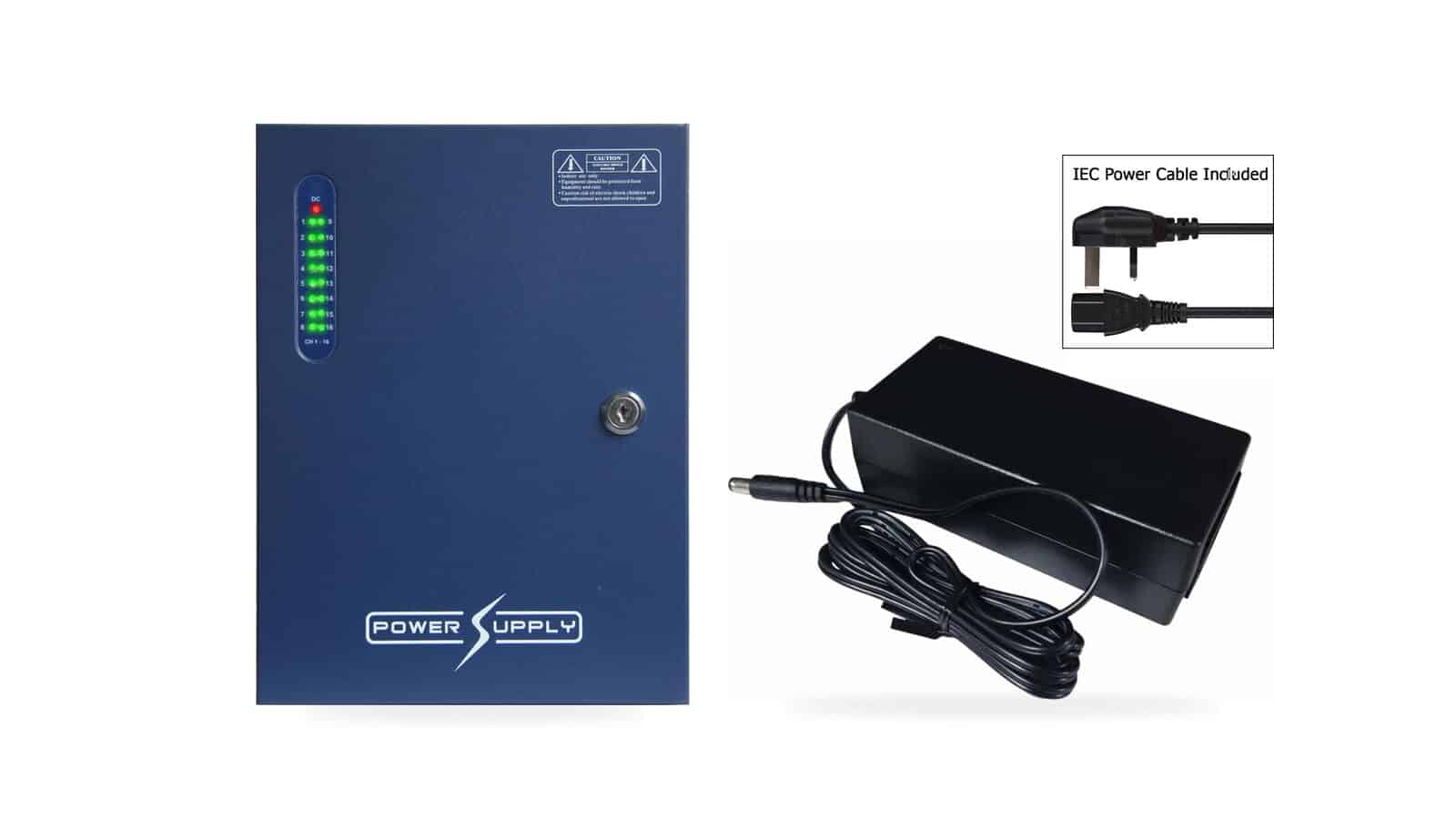
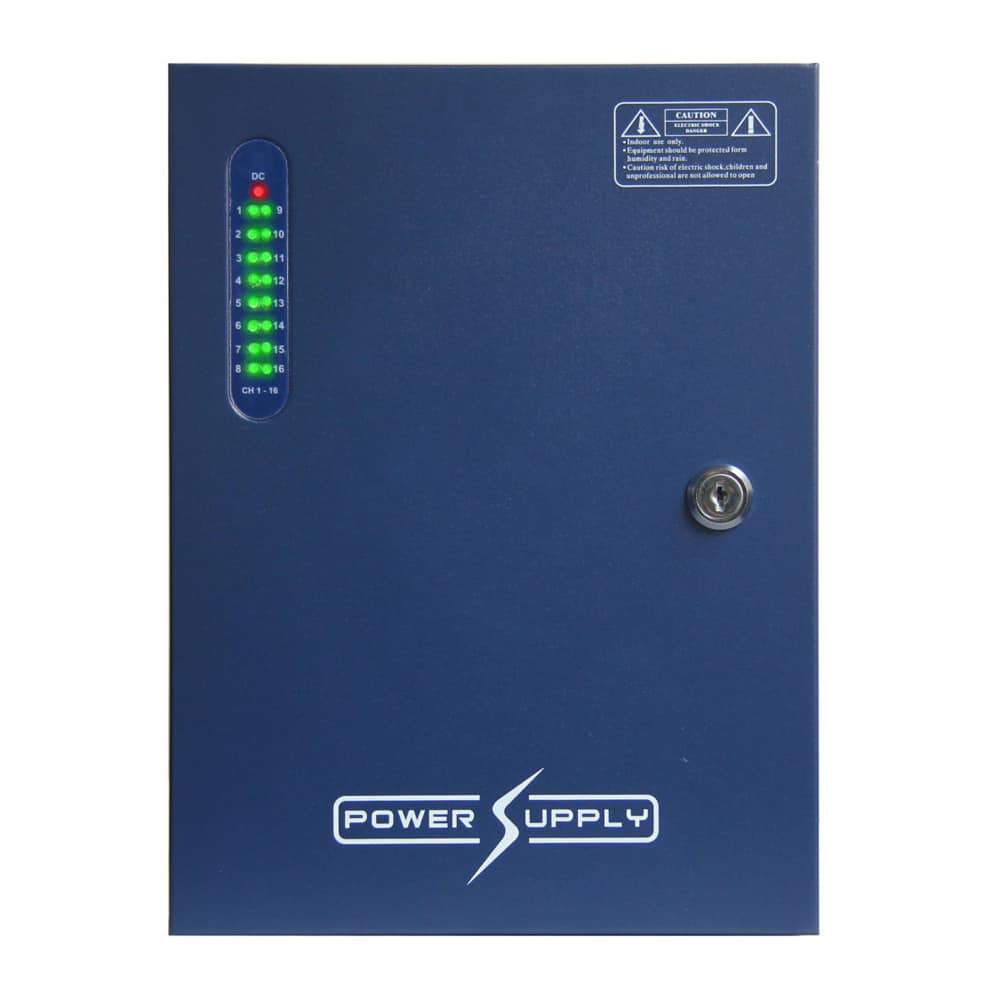
For more than four or five cameras, or anything commercial, use a boxed power supply with an individual fuse on every output. Our boxes go up to 18 outputs at 20A. The fuses are what matter. Many use PTC fuses, which reset themselves once the fault is cleared, so a squirrel chewing through one cable kills one camera and leaves the rest running.
Boxes like these also keep the power in one lockable place next to the recorder, with a neat row of terminals rather than a tangle of adapters. If you’re powering a lot of cameras, there are rack-mount versions that sit in a data cabinet beside the NVR.
Voltage drop on long runs
The power cores in shotgun cable are thin, and thin copper loses voltage over distance. A camera drawing half an amp at the end of 50 metres of small cores can see noticeably less than the 12V the supply sent, and it gets worse at night when the draw goes up. The symptom is a camera that’s fine all day and reboots or loses its picture after dark.
Measure the voltage at the camera end at night with the camera running. If it has sagged a long way, power the far cameras from a separate supply near them, or run heavier cable for the power. For runs that long, IP cameras on PoE are often the better answer anyway, because PoE runs at a much higher voltage and loses proportionally less. PoE for CCTV explained covers the budgets.
Powering the recorder
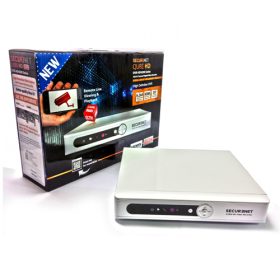
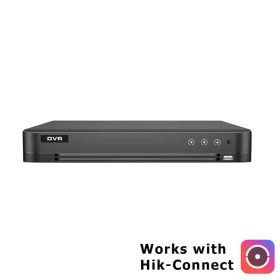
Most DVRs run on 12V DC from their own adapter. Older Hikvision DVRs used a round 4-pin plug instead of the usual barrel, and if yours is one of those, we sell 12V adapters with the 4-pin plug already fitted in 2A and 5A. Check the rating on the label underneath the recorder before you buy a replacement, and buy one at least that big.
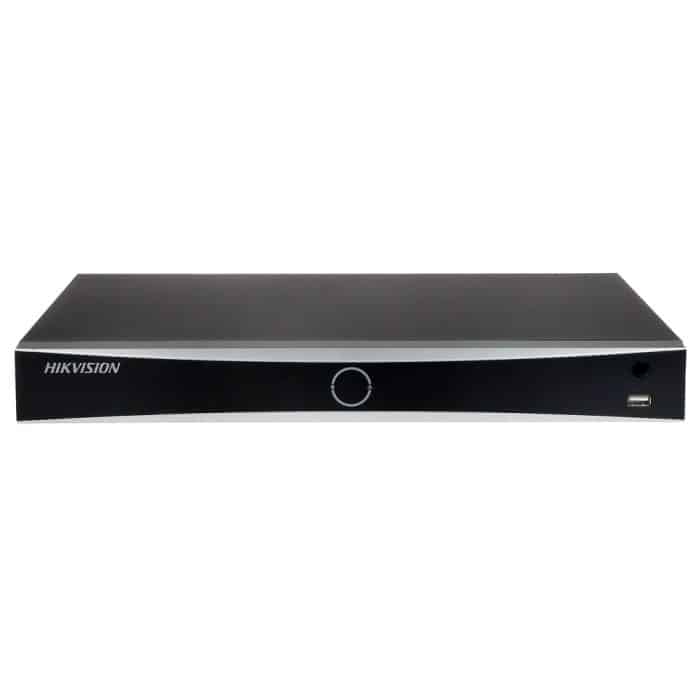
PoE NVRs are different. They usually have a mains lead and an internal supply, or a higher-voltage adapter that feeds the PoE ports. Never put a 12V adapter on a PoE NVR. And a small UPS under the recorder and the router keeps the system recording through a power cut, or through someone flipping the switches on the fuse board.
24V AC for PTZ cameras
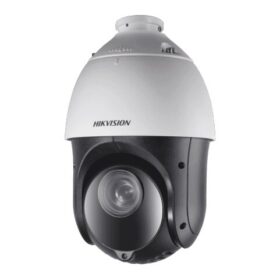
Many analogue PTZ cameras and some heated housings run on 24V AC, not 12V DC. They need their own supply, usually on screw terminals. Never connect a 12V DC camera to a 24V AC supply. The camera won’t survive it. Our Haydon 24V AC box runs either one large PTZ at 4A or four smaller loads at 1A each. More on PTZs in PTZ cameras explained.
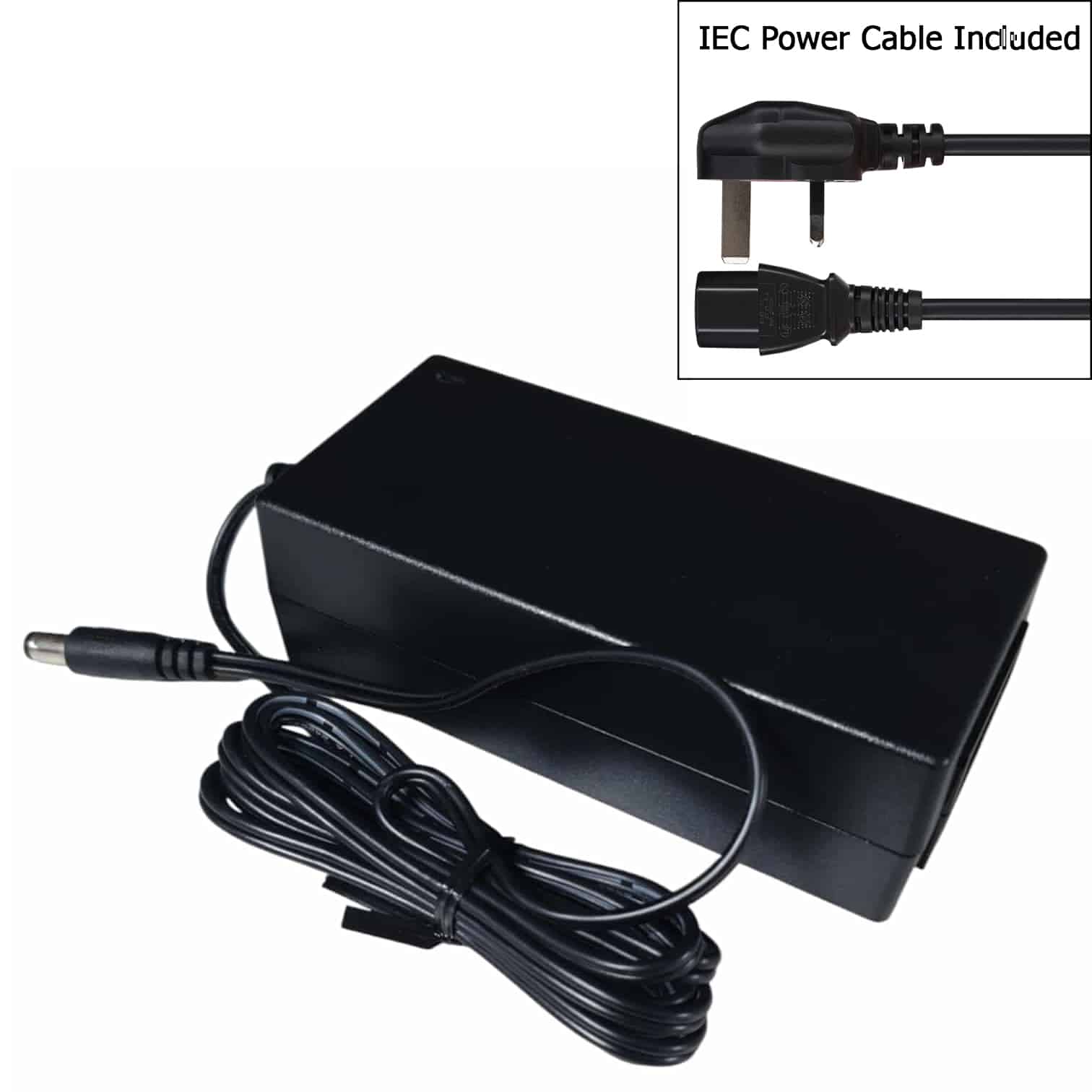
12V 5A power adapterFor a recorder, or for several cameras on a splitter lead.

Haydon 9-way 5A fused PSUBoxed, surge protected, a PTC fuse on every output.
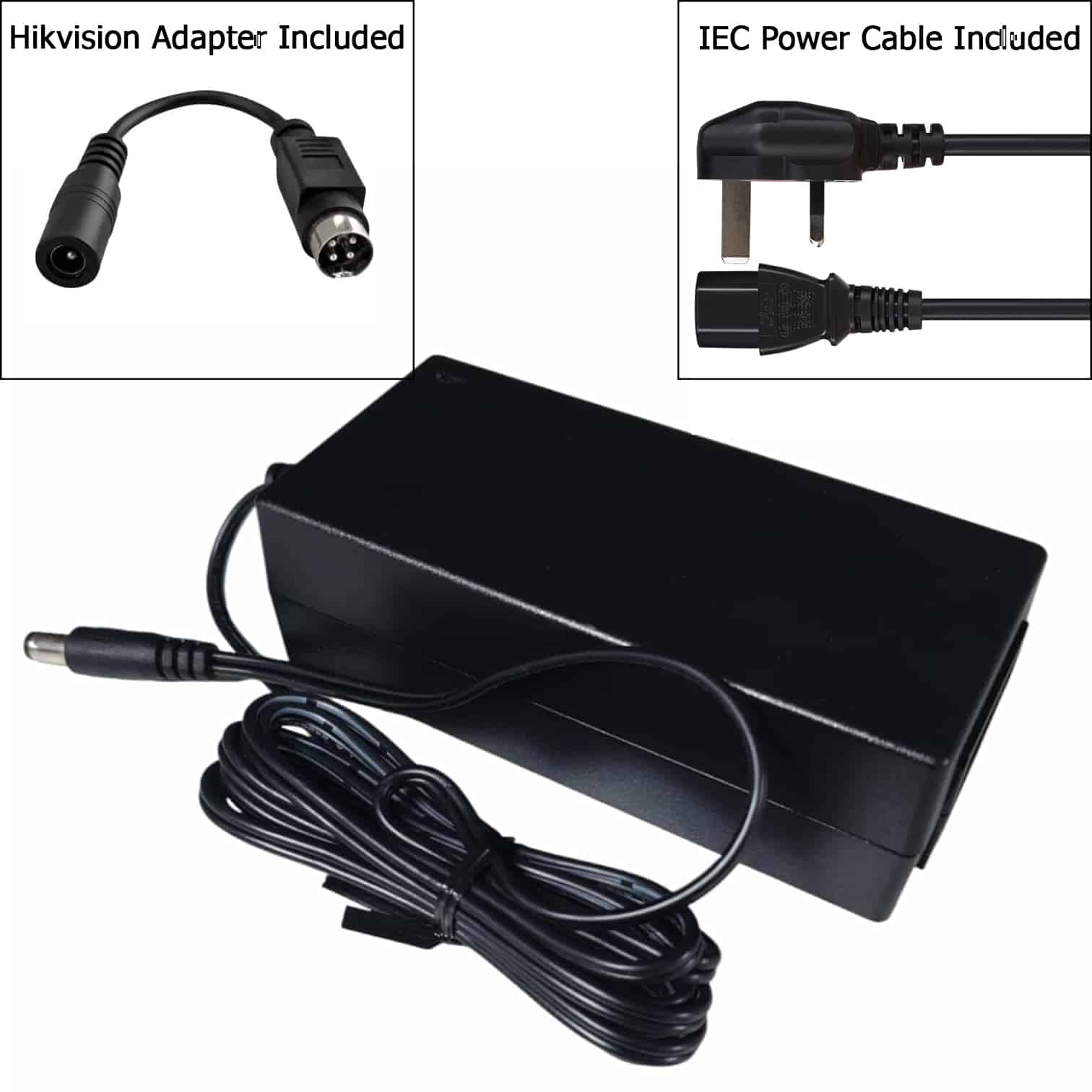
12V 5A adapter with 4-pin plugFor older Hikvision DVRs with the round 4-pin socket.

All power suppliesAdapters, distribution boxes, rack-mount units and splitter leads.
A plug-in adapter is safe to fit yourself. A box that needs wiring into the mains is a job for an electrician. For the plugs on the camera end of the power cable, see CCTV connectors explained. Not sure what a camera draws? Send its model through our contact form and we’ll look it up. Our analogue kits come with power sorted, and the CCTV kit buying guide explains what else is in the box.
Frequently asked questions
What power supply do I need for CCTV cameras?
Most analogue and non-PoE cameras need 12V DC. Add up each camera’s maximum draw in amps, add at least a quarter for headroom, and choose a supply at or above that figure.
How many amps does a CCTV camera use?
Typically 0.3A to 0.75A at 12V, highest at night when infrared or white light is on. The datasheet’s maximum power figure divided by 12 gives the amps.
Can I power several cameras from one power supply?
Yes, with a splitter lead or a distribution box, as long as the supply is rated for the total draw. A box with a fuse on each output is safer, because one fault only affects one camera.
Why does my CCTV camera keep rebooting at night?
Usually power. The draw rises when the night lighting comes on and an undersized supply or a long, thin power cable lets the voltage sag. Measure the voltage at the camera at night.