












How-To
PoE for CCTV Explained: Standards, Budgets and Cable
 How-To
Four cameras used to be two days’ work. Now it’s an afternoon. One cable per camera, and no fused spur up at the eaves for a sparky to argue about. Power over Ethernet also hands you a fresh set of ways to get a job wrong, and the best of them stay invisible for weeks, right up until the cameras start dropping off at random and nobody on site can say why.
The standards
| Standard | What everyone calls it | Out of the port | Left at the camera |
|---|---|---|---|
| 802.3af | PoE | 15.4 W | about 12.95 W |
| 802.3at | PoE+ | 30 W | about 25.5 W |
| 802.3bt | PoE++ | 60 to 90 W | 51 to 71 W |
The gap between those last two columns is copper resistance doing what copper resistance does, and it’s the reason a camera rated at 12 W can still sulk at the far end of a 90 metre pull on thin cable. Most fixed cameras sit happily on standard PoE. PTZs want PoE+. So does anything with a heater in it, or an illuminator with real punch behind it.

Budget is not the same as port rating
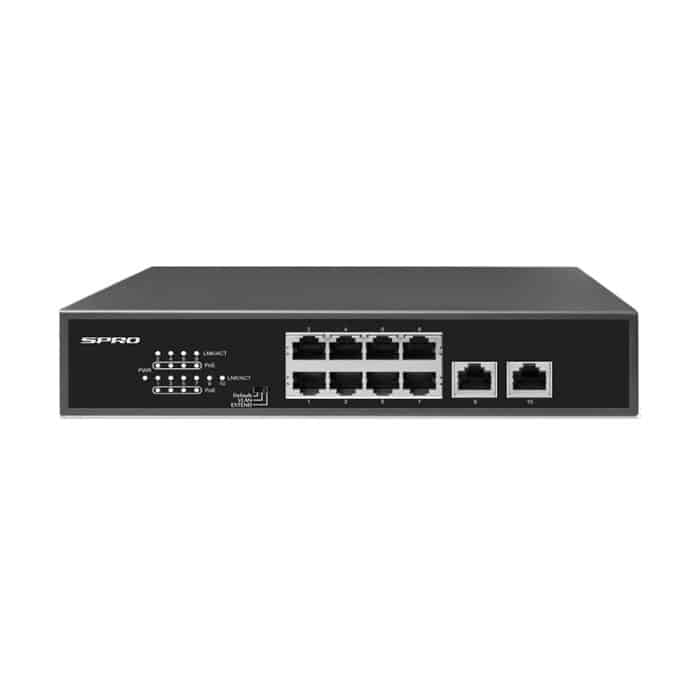
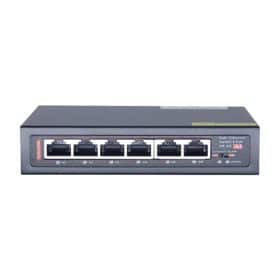
This one causes the intermittent faults nobody can pin down. A switch can advertise PoE+ on all eight ports and still carry a total power budget of 65 W. Eight cameras at 10 W each is 80 W. That switch can’t do it, whatever the lid says.
Worse, it doesn’t fail cleanly. It sheds its lowest-priority ports, so one camera drops out now and again and comes back on its own before you’ve got the ladder off the van. You suspect the camera, then the cable. A fortnight in, somebody finally reads the spec sheet properly.
Add up the real draw of everything hanging off that switch, put about twenty per cent on top for cable loss and headroom, then hold that number against the total budget rather than the per-port figure on the box. Two minutes with a calculator. Saves a fortnight of guessing.
Cable
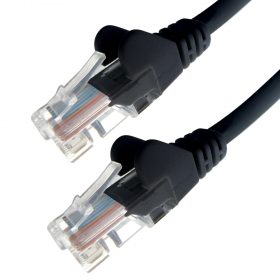
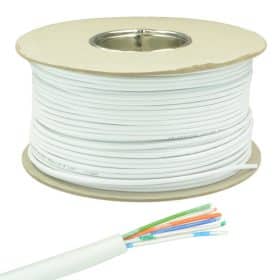
Cat5e carries PoE and PoE+ without complaint. Cat6 buys you thicker conductors and a bit less voltage drop on a long run, which is nice to have rather than something you need. Either will do the job. What’s inside the sheath matters far more than the number printed on it.
Solid copper or nothing. Copper-clad aluminium is cheaper on the drum, carries more resistance, runs hot under load and becomes a genuine fire risk once it’s bundled through a loft. It’s the worst false economy in this trade. We won’t sell it, and if you turn up at the counter with a box of it we’ll tell you what you’ve bought.
After that the rules are short. Respect the 100 metre limit, and remember your patch leads at both ends are part of that hundred. Outdoors, buy external grade. Standard PVC perishes in UV, going chalky and splitting after a couple of British summers, and that’s a long ladder to climb again for the sake of a cable that should have cost a few quid more.
Powering from the recorder
Most NVRs have PoE ports on the back and for a small system that’s the tidy way to build it. Two things catch people out. The PoE port count is often lower than the channel count, which is a nasty surprise at the quoting stage. The recorder’s own PoE budget also tends to be modest, and it is shared across everything plugged into it.
Above eight cameras, or where the cameras run off in different directions, a separate switch is the better build anyway. A dead switch then doesn’t take the recorder down with it. That matters more than it sounds like it should.
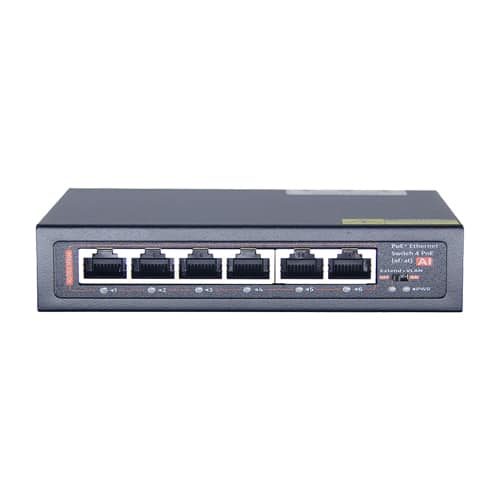
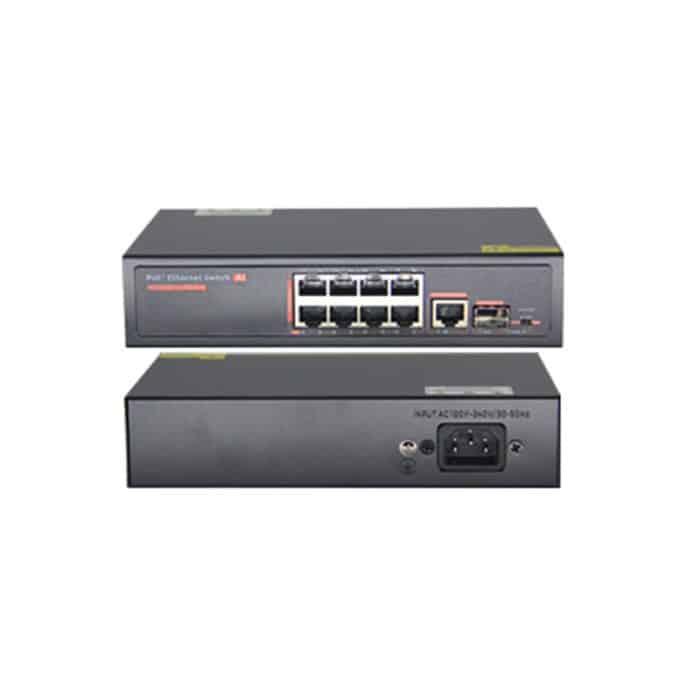
We keep PoE switches and injectors and external-grade cable at the Camp Hill counter. Stock depth varies, mind. A few lines need an approved trade account before we can sell them to you at all. Online orders are usually dispatched within 24 to 48 hours. Ring 0121 655 0146 and we’ll tell you straight which one you’re dealing with.
Frequently asked questions
Do I need PoE or PoE+ for CCTV cameras?
Standard PoE covers most fixed cameras. Move up to PoE+ for PTZs, and for anything carrying a heater or a powerful illuminator.
How far can I run a PoE camera?
100 metres, and that includes the patch leads at both ends. Past that you need an extender or a switch sited closer to the camera. Fibre, if the distance is long enough to justify it.
Can I use Cat5e for PoE CCTV?
Yes, as long as it is solid copper rather than copper-clad aluminium. Cat5e handles PoE and PoE+ without trouble.
Why do my cameras keep rebooting?
Nine times out of ten the switch’s total PoE budget is exceeded, even though each port is rated high enough on its own. Add up the actual draw and compare it against that total.
Networking
All Networking