





















Buying Guides
CCTV Connectors Explained: BNC, DC, F-Type and Baluns
 Buying Guides
Most CCTV faults aren’t in the camera or the recorder. They’re in the last centimetre of cable, inside a connector somebody fitted in the rain. A rolling line across the picture, a green tint, a camera that drops out when the wind blows, a screen that’s fine until the evening damp sets in: nine times out of ten that’s a plug. So it’s worth knowing what each one does and which kind to buy.
BNC: the video connector
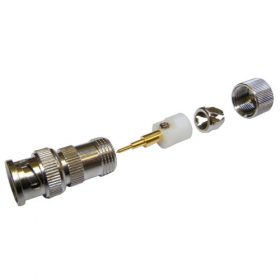
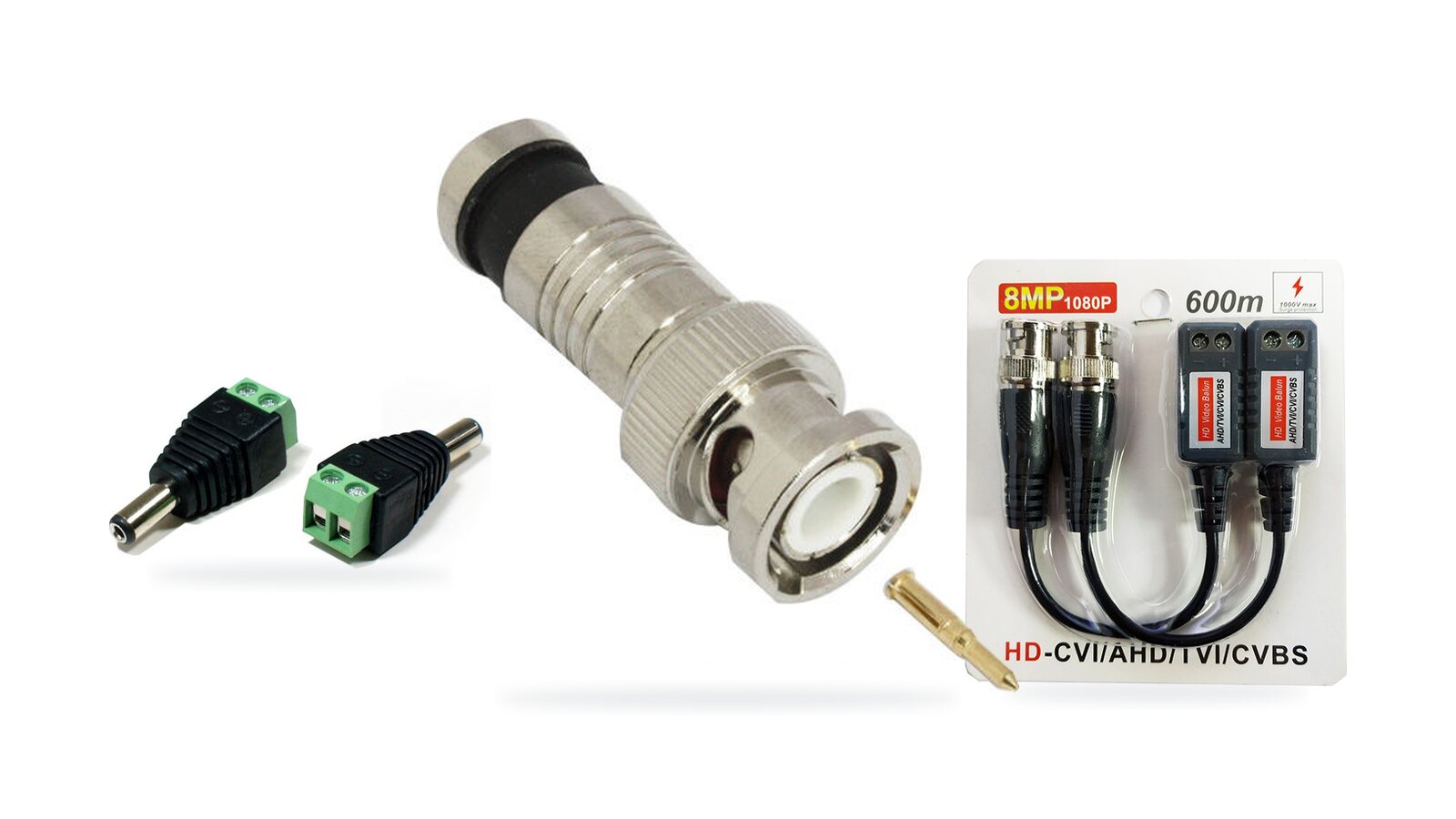
BNC is the round bayonet plug on the end of every coax cable in an analogue CCTV system. Push it on and give it a quarter turn. It locks. It carries the video from the camera to the DVR, and on audio cameras it carries the sound too.
There’s more than one way to fit one to a cable, and they aren’t equal.
| Type | Tools | Good for | Watch out for |
|---|---|---|---|
| Screw-on | Strippers only | Indoor runs, quick repairs, testing | Can work loose; the centre conductor relies on a good strip |
| Crimp | Crimp tool with the right die | General installs | A wrong-size die gives a crimp that pulls off |
| Compression | Compression tool | Outdoor ends and anything permanent | Must match the cable: RG59 and RG6 versions are different sizes |
Our view is simple. Compression for anything outdoors or anything you never want to look at again. Screw-on is fine inside a dry loft, and a premium screw-on with a spring grip holds better than the cheapest kind, but it’s still the first thing we’d suspect on an intermittent camera.
Whichever type you use, match it to the cable. RG59 and RG6 have different outer diameters, so an RG6 compression connector on RG59 has nothing to grip. If you’re not sure which you have, our guide to RG59 and RG6 for CCTV shows how to tell.

Fitting a BNC properly
Strip to the lengths the connector maker gives, not by eye. Fold the braid back neatly and check that not a single strand of it is touching the centre conductor, because one stray hair of copper shorts the video and gives you a black screen or a picture full of interference. Then pull. If the plug moves on the cable, cut it off and start again. Thirty seconds now saves a ladder later.
DC power plugs
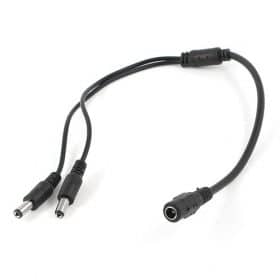
Most 12V cameras take a barrel plug that’s 5.5mm across the outside with a 2.1mm hole in the middle. Our screw-terminal plugs take the two power cores from shotgun cable or a power supply’s flying lead, so you don’t need to solder anything. They come in male and female, and both are rated for 12V or 24V DC.
Polarity is the thing to get right. Almost every CCTV camera is centre positive, and the terminals on the plug are marked + and -. Swap them and a camera with reverse-polarity protection just won’t start. One without it may never start again. Use red for positive every time, even when the cable’s cores are both black with a stripe, and you’ll never have to think about it.
“24V” on a plug can mislead, because it means the plug will handle 24V DC. Many PTZ cameras run on 24V AC instead, which usually goes in on screw terminals rather than a barrel. Check the label on the camera, not the label on the plug. Power supplies and how many amps you need are covered in our CCTV power supply guide.
F-type and BNC to F adapters
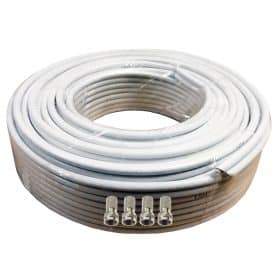
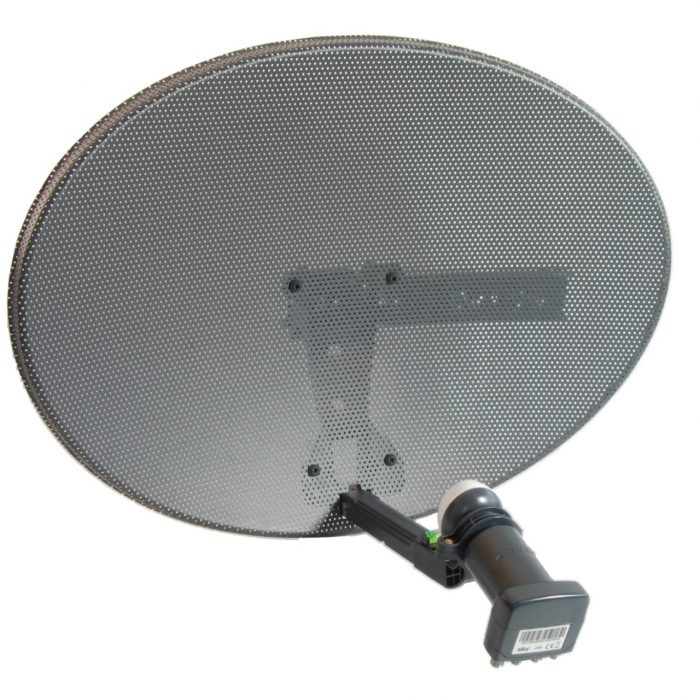
F-type is the screw-on plug used for satellite and TV coax. CCTV doesn’t use it, but it turns up whenever someone tries to reuse an aerial or dish cable for a camera. A BNC-to-F adapter makes the connection. Whether that cable then gives a good picture is another matter, because most satellite coax has a copper-coated steel centre that suits a dish far better than a camera. Fine for a short run. Disappointing for a long one.
Baluns: what “BNC to RJ45” really means
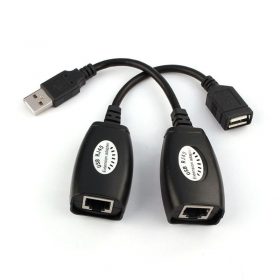
Search for a BNC to Ethernet adapter and you’ll find baluns. A balun converts the analogue video from coax into a form that travels down one twisted pair of a network cable, and a second balun at the other end turns it back. They come as a pair. One at the camera, one at the DVR.
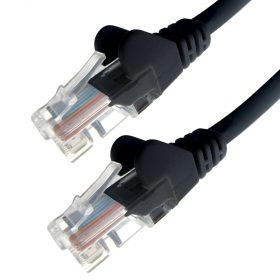
What a balun doesn’t do is turn an analogue camera into a network camera. The signal is still analogue. Plug the balun into a router or a switch and nothing happens. It only lets you use network cable as if it were coax, which is handy when there’s spare Cat5e in the wall going to the right place.
Buy the right grade. Older baluns were made for standard-definition CVBS video, and they struggle with the far higher frequencies of an 8MP HD-TVI signal. For any modern camera use an HD balun rated for the resolution you’re running. And remember the other pairs in that cable can carry power too, though thin network conductors drop voltage quickly over distance. On a new install our advice doesn’t change: if you’re pulling network cable anyway, fit IP cameras. IP vs analogue HD explains why.

Couplers and other adapters
A BNC coupler joins two plugged cables end to end. It’s a fair repair indoors. Outside, put it in a junction box and tape it, or replace the run, because a joint in the open is the next fault waiting to happen. A BNC T-splitter sends one camera’s video to two places, which is fine for plugging in a test monitor for a minute and poor as a permanent fix, since splitting the signal passively weakens it and can ghost the picture.
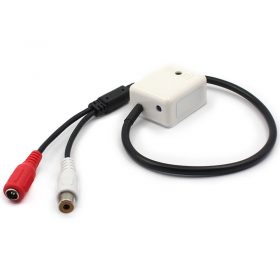
BNC-to-phono adapters connect RCA audio leads, such as the output of a stand-alone CCTV microphone, to a recorder’s audio input. Adding sound to a camera is covered properly in CCTV with audio.
Keeping connectors dry
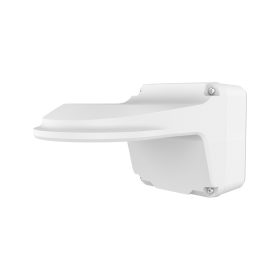
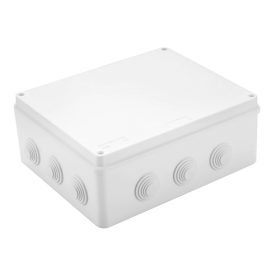
Water gets into connectors by running down the cable, so the plug and the joint should never be the lowest point. Leave a drip loop. Put every outdoor joint inside a junction box or a deep base behind the camera, which is what they’re for (see junction boxes and brackets). A wrap of self-amalgamating tape over a compression plug finishes the job.
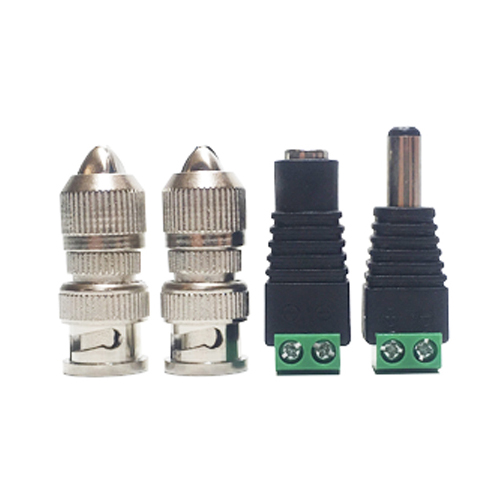
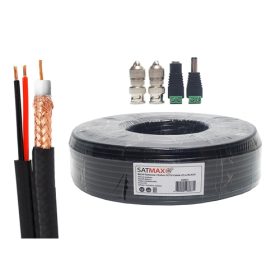
Video and power connector packBNC and DC plugs together, for finishing cable cut from a drum.

Premium screw-on BNCFits RG59 and RG6. For indoor ends and quick repairs.

12/24V DC male plugScrew terminals for the power cores. No soldering.
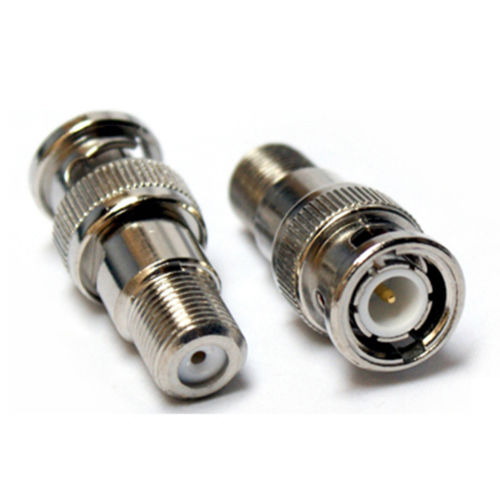
All CCTV connectorsBNC, F-type, phono, RJ45 and couplers.
Building a system from cable on a drum rather than a kit? The CCTV kit buying guide has a section on the parts kits leave out. And if a connector question has you stuck, our contact form reaches the counter.
Frequently asked questions
What connector does CCTV use?
Analogue CCTV uses BNC plugs for video and a 5.5mm by 2.1mm DC barrel plug for 12V power. IP cameras use a standard RJ45 network plug, which carries power as well when the camera is PoE.
Can I convert BNC to Ethernet?
Only to run analogue video over network cable, using a pair of baluns. It does not make the camera work on a computer network or a router. For that you need an IP camera.
Are screw-on BNC connectors any good?
They work, and they are quick, but they are the least secure kind. Use compression connectors outdoors and on any permanent run.
Are RG59 and RG6 BNC connectors the same?
Screw-on types often fit both. Compression and crimp connectors are sized for one cable, so buy the version that matches yours.